
Transforming Communication for a Change

by Alan Howell
Director of Church Relations
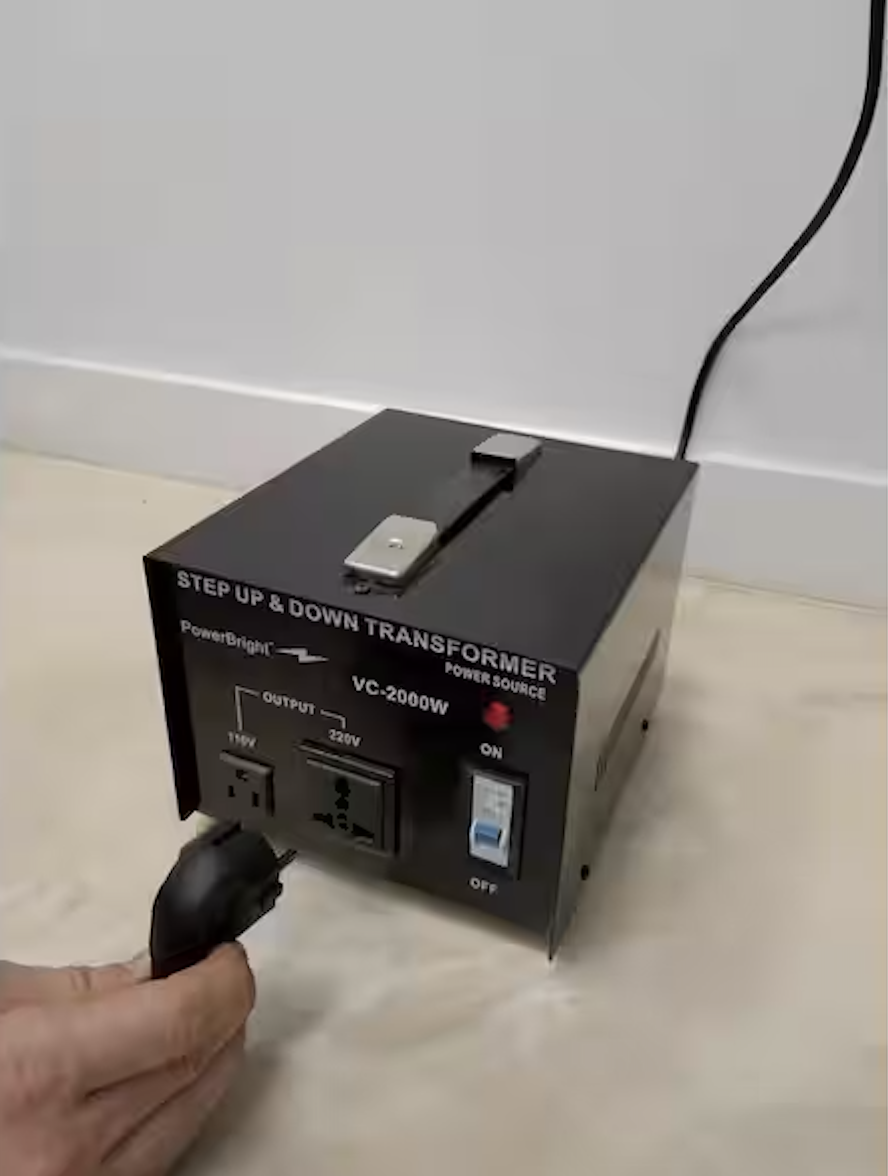
Transformers have been a bigger part of my life than I expected.
Now, I’m not talking about the transformer toys that change from cars into awesome robots (although those were a big part of my childhood!). The transformers I’m referring to are 220V to 110V Step Down Transformers.
When we were living in Mozambique, Africa, we had these heavy black boxes in different rooms of our house to transform the higher voltage power coming through the wires in our walls and stepping it down to a voltage that some of our devices and tools were made to handle. Whenever American visitors came to stay with us, we had to show them how to use these boxes and know where it was safe to plug in their phones, cameras, etc.
Moving back to the U.S.A. it has been nice to not have to worry about where and how to plug in devices. But, from my own experience and from talking with kingdom workers who experience life in a host culture and then move back home, there is a different type of voltage transformation we have to pay attention to. Here’s what I mean by that: Many people who get to participate in the Mission of God end up feeling familiar with a range of problems in ways that are unfamiliar to many. And having to consider major cultural problems from different angles can significantly shift their perspectives. As they assess the simplistic stories, platitudes, conventional wisdom, and typical binary frameworks about those hard topics from their home culture, they find that those understandings are not big enough to make sense of all their experiences.
So, these kingdom workers may be more likely to charge into uncomfortable conversations ready to talk about big topics, and they may be less afraid of big words that feel shocking, emotionally or politically charged, and controversial to others.
For example, a former or current missionary may feel comfortable using terms like Colonialism, Racism, Patriarchy, Hierarchy, Systemic Poverty, Nationalism, and others as ways to make sense of what they see and experience at home and abroad. Their experiences of crossing cultures may have normalized these potentially high voltage terms because they needed them as a type of useful shorthand to make sense of the complexity of the world around them.
The challenge, though, comes when this kingdom worker (who may have been on the front lines of engaging people impacted by the powers, principalities, and complex problems), enters into conversations with people back home who have not had those experiences. Sometimes, those important and useful labels can end up being a barrier instead of a bridge for people that are unfamiliar with them.
I have found that in conversations and presentations, if I want to use one of these terms to describe a complex problem the people of God are facing, I need to be clear about defining them and take some of the sting of unfamiliarity out of them. I may need to let a friend or audience “borrow my transformer” to step down the voltage on that term or concept to empower a helpful conversation.
Let me state clearly here that using a “transformer” like this is not about ignoring a hard problem or avoiding that subject, instead it is about translating and communicating in ways that focus on the voltage the receiver can handle without overwhelming their circuits. If I don’t do that and plug them in directly, it can end up short-circuiting the major goal of bringing about real understanding and change.
So, my rule of thumb is this: unless a single person or a whole audience has demonstrated that they have their own power transformer and can step down the voltage on a difficult term, I need to intentionally plug the conversation into my transformer every time I use that term to unpack this topic with them.
Let me share an example to illustrate this. A while back, I was doing a workshop with a church to help them improve their missions engagement. On Friday night, we spent time considering changing global dynamics and the role of the American church today and the part God may be calling us in the West to play in missions. We spent some time considering history and how Colonialism and Racism have ended up shaping the way that Christian missions has been done poorly. I had used those terms (Colonialism and Racism) a few times during the presentation, but each time I had been intentional about plugging them into “my transformer” to make sure we all understood what I meant by that. Throughout the course of the evening, we leaned into the idea that while those dynamics were not created “by our hands” they were “in our laps” and that faithfulness to God meant that we needed to respond and act appropriately. The next day, on Saturday morning, we continued the workshop and another member of the church who had missed the previous evening’s sessions joined us. While the members of the group who were with me on Friday evening had been used to plugging those potentially charged terms into my “transformer,” this new person was not used to that and immediately objected. During one of the bathroom breaks, he pulled me aside to try to convince me that Colonialism wasn’t a real thing. I sighed, realizing that to continue this conversation for the whole group that would include this newcomer, I would need to also be intentional about running the conversation again through my transformer.
In order to transform communication for change, kingdom workers will need to follow the best practices they were taught for serving those on the field with those at home as well – doing the hard work to practice “receptor-oriented communication.” The point is not for the communicator to share the message the way she or he prefers to share it, the point is for the receiver to get the message in a voltage that they can process, incorporate, and use to power their lives and make use of their power accordingly. Sometimes long-term and short-term missionaries can make the mistake of assuming that everyone else shares their same experiences and is used to using a transformer. We must remember that this ideal is not real. For those of you involved in caring for your workers, let me ask you to kindly remind them that they may need to use transformers when talking about complicated, crucial concepts and realities.
To continue this analogy a bit, some voltage transformers we had in our house in Mozambique also included a voltage regulator as well. Those bigger (and heavier!) types of transformers would include a voltage gauge as well as a breaker. They would monitor the flow of power and shut down if the voltage became dangerously high.
Good communicators are in tune with what is happening and are able to observe how well a person or the group is handling a hard topic. They know when it is safe to bring the voltage up and when we’re at risk of burning out someone’s wiring.
Communication is challenging and kingdom workers and those who send them need each other to have a global perspective on how God is at work in transforming the world today. For more on how to think about politically loaded language and ways to handle the voltage of that on the mission field, check out this article here.
May God help us use whatever transformers are at our disposal to communicate in ways that change us all in the likeness of Christ!
For a follow-up conversation on this topic or other areas that you or your church would like assistance with, send me an email at alan.howell@mrnet.org.